
People who don’t work in this field often tell me how frightened they’d be to stand near a dead body. Those of us with actual experience know there’s nothing dangerous about a dead body. In fact, we often joke that the living are the ones you should be afraid of!
Much of the fear around death comes from decades of dramatic movie scenes and horror films. I understand the fear! The thought of a dead body suddenly rising from the morgue table and grabbing your neck is terrifying! It is also pure fiction.
In this post, we’re going to clear up some of the most common myths fueled by Hollywood and explain what really happens in the morgue.
Can the dead move?
Rigor Mortis
Last month, we published a post called “Debunked” about an image that has been circulating on the internet for years. It is a photo of a man on the autopsy table, and his body is propped up. People who have been passing around this photo say that the body propped itself up. NOPE! In that post, I described that the stiffness of his body is due to rigor mortis.
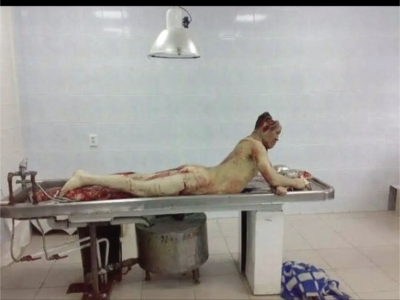
There are, however, other ways a body moves after death.
Decomposition
Gas
As the body decomposes, bacteria begin to multiply, helping break down tissues and producing gases that cause the body to bloat. It can cause the arms or legs to move, the abdomen to expand, the fingers to curl, and, in some cases, the whole body to move slightly.
Check out this old video showing how a baby pig decomposes. If you fast-forward to 2:52, you can see how the gas buildup is causing the pig’s front leg to move.
Post-mortem drying
The skin, muscle, and soft tissue can dry after death, which depends on the temperature and environment. This can cause tendons to tighten, making fingers bend slightly, limbs pull inward, and the jaw open or close.
Can the dead speak?
Think of the respiratory system like a woodwind instrument. The lungs act as the air source, the trachea is the tube, and the sound comes out through the mouth. When a person is alive, they actively push air from their lungs through the larynx and past the vocal cords, which vibrate to create sound.
Obviously, once someone has died, they’re no longer voluntarily moving air. But if the body is shifted or if gases build up during decomposition, any remaining air in the lungs can rise through the trachea and escape through the mouth, creating noise. In a sense, you’re hearing a person’s final breath make its way out!
These sounds are usually groans, sighs, squeaks, or low moaning. It’s one of the few times Hollywood actually gets something right: those zombie and mummy noises? Pretty accurate!
Do the dead have reflexes?
Postmortem muscle twitching
Very shortly after death, some cells still retain energy, allowing tiny muscle twitches to occur. These are quick and small, and they stop once the cells run out of energy.
I have experienced this only once, and it was enough to freak me out!
We were getting ready to do an autopsy on a dead baby who died in a reported co-sleeping accident when I was a new student. The baby was lying on the morgue table, and I just kept staring at it because I felt so terrible. Then I noticed something, the arm was twitching!! At first, I didn’t believe my eyes! I kept staring, and sure enough, I saw it happen again. I felt foolish saying something, but before the pathologist started cutting, I needed assurance that the baby was actually dead!
Cutis anserina
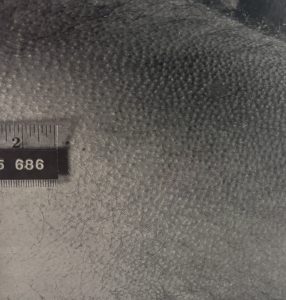
Goosebumps. Goosebumps can occur in dead people due to rigor mortis of the short muscle fibers in the skin.




When I was an ICU nurse, I had dead bodies expel air like they were breathing a couple of times while we were bathing and turning them to prepare for the funeral home. It was freaky the first time! I once had a lady who was pronounced, then she really did move and her heart started beating again! She was still hooked to the monitor so we could see it. Scared the shit out of us. She died permanently about 15 mins. later.
I love your last sentence, “She died permanently about 15 mins later.” I find humor in the weirdest places and ways.
May I ask, are you from Silver Springs, FL? I ask because I am from Sarasota, FL. My family used to go to Silver Springs for the glass bottom boats and seeing what there was to see in the 60s and 70s. My grandmother especially loved going to Silver Springs.
I couldn’t figure out how to word it and settled on that! Most medical people have a weird sense of humor too. 😄 You kind of have to develop one when you deal with unpleasant things a lot.
No, I’m from near Atlanta…it’s after the Fleetwood Mac song. I’m old and I have loved it since I got it on a 45 when I was 13, not just recently since it’s been everywhere! But one of my nursing school roommates was from Ocala and talked about the glass-bottom boats in Silver Springs! I always wanted to go there. I think she said Creature from the Black Lagoon was filmed there? Way, way before our time!
My husband is from Ocala, we’ve lived there and been to SS for the glass bottom boats… One of the James Bond movies was filmed there as well 🙂
The mummy of Ramesses II “moved” it’s arm when it was discovered and unwrapped. Temperature change caused the preserved tendons to shift but it was the 1800s and it caused quite a stir.
I am not, nor have I ever been in the medical field. I have always been fascinated with human anatomy and medicine. I have to admit, I still get a bit weirded out with being around dead bodies. Intellectually, I realize there is nothing to be afraid of, as they are simply human bodies that are no longer alive, yet my emotional side still freaks out a bit. Nothing in The Gross Room freaks me out, but if you were to put me next to some of the examples we get to see, just sit back and enjoy the show.
Super interesting!
The only dead bodies I’ve been in close contact with, were my grandmother and my husband. It’s jarring looking at the face of a loved one, and feeling no spark of the person they used to be. But the body itself just feels like a chunk of meat. I don’t think I’d feel much fear regardless of who the corpse was.
Same. I was with my Nana when she passed in 2004. I was also with my mom when she passed in 2012. In the moment, it feels unreal. I really can’t describe how I felt in both of those sad events. I miss them both so much.
In awe of that pig video!!! So many maggots!! And how much they make the pigs skeleton move!! The decomposition process is so interesting
cool video !
I have been around countless dead bodies as an inpatient hospice nurse for 15 years.
Dead bodies are nothing to be scared of.
I never heard any of them groan or saw anyone move. I’ve been peed on and had oral secretions all over me more than once from a body
Catmom, I may have mentioned this before and it bears repeating, I have an enormous respect for all nurses and medical staff, nurses and nurse practitioners in particular. I feel a special reverence for hospice nurses. I follow Hospice Nurse Julie on YouTube to learn more about the death and dying process in hopes of coming to grips with that, and how well my cousin was treated in the hospice facility when she was in the end stage of her esophageal cancer. My god, she was unrecognizable at the end. Her face was quite distorted.
I remember when I was an active duty Marine, we were exposed to some pretty awful things in training, and ending up with mouthfuls of dirt, sand, small insects, non-potable water, and other really gross stuff as we vied for the alpha position within our Neanderthal and Cromagnon Man tribes. Youth is definitely wasted on the young. Our allegedly more mature, smarter leaders weren’t much better in their own way. They would hide it better and make bets on which junior enlisted dumb ass was going to ascend Mount Darwin the fastest. All this to say, why would or should I be freaked out by a deceased body? It doesn’t make sense.
My mom is a retired nurse, and worked in several nursing homes over the years. She introduced me to a dead body at a young age, probably about 9 years old, and taught me there is nothing to be afraid of. She even had me touch it, and I’ve never had a fear of them. It’s a natural part of the life cycle, and the shell that is left behind when we go on to whatever awaits us after.
Are you always wearing a mask during autopsy? It would be weird to breathe in a dead body’s “breath”.
Huh? Breathing a dead person’s breath? Wanna elaborate on that a little since dead people dont breathe?
Great post as usual!! I was an autopsy assistant for a few years and had some experiences with the dead bodies moving. One was a high school kid that was stabbed shortly after prom. He was stabbed in the chest and had air trapped, so he let out a groan when we were moving him on the table to look at his back. That was terrifying! Then we had a 9 year old kiddo who hung himself (I know 😢) and he was in the ER for a short time. We pulled out his catheter and he peed across my face. I wasn’t wearing goggles. Luckily urine is aseptic so it was fine, just jarring. Then we had a few river bodies (elderly couple killed for insurance payout) and they had river worms pinging off the bodies for the majority of the autopsy! We were checking each others hair and reassuring each other that we didn’t have critters on our gowns!
Then I was setting up a body in our room with hepa-filter since we knew they had hepatitis (negative pressure room plus suits for us to not be exposed to the bone dust). The patent’s feet were to my left by the sink and they slowed pulled back disappeared from my peripheral view!!! It was actually just my colleague moving the table back!! The room’s fan/filter was so loud that I didn’t realize anyone came into the room!! 😱 I tossed the scalpel and towel clips I was setting out and screamed haha! Glad no one got hurt 😜
I was working a suicide once and when the medical examiner and his transport team started transferring the body from the bed to the gurney, the body…. farted😆. What really killed me was that the ME was in the middle of talking and without skipping a beat he said “excuse you” As if the body had sneezed😆 i was so confused cuz at first I figured it was one of the 3 livings that had farted but when the 2 transport guys kinda sprang back it clicked for me and I had to fight sooooo hard not to laugh out loud. The wife was still in the house, in another room but still.
Mrs Angemi, is it true that hair and fingernails still can grow after death?
Not really, the tissues just shrink back giving the appearance they are growing but really it is just exposing more of the area of skin or nails that is embedded within the skin