
Want to listen? Click play!
Just last week, news broke that not one, not two, but three stars from the 80s suddenly died – Ozzy Osbourne, Hulk Hogan, and Malcolm-Jamal Warner aka Theo Huxtable from The Cosby Show. Today, we’re going to look into the circumstances surrounding the actor’s death and why it’s important not to ignore officials’ warnings at the beach.
Malcolm-Jamal Warner – Celebrity Death Dissection

Manner of Death:
Accidental
Cause of Death:
Asphyxia by submersion (drowning)
Circumstances Surrounding Death:
About two weeks ago, Malcolm-Jamal Warner and his family were on vacation in Costa Rica. For this case, it’s important to note they were at a beach just south of Limon, which is on the Caribbean side of Costa Rica. This region is known for its powerful rip currents and large waves, making it a popular spot for surfers. In fact, the currents are so well-known at this beach that professors have taken students there to study them.

Beach location
On Sunday, July 20th, the Costa Rican Tourism Board posted a series of warnings in addition to putting up red flags on the beaches.

Typically, if a red flag is out, that means the conditions are hazardous. The public is still allowed to go into the water, but must proceed with caution.
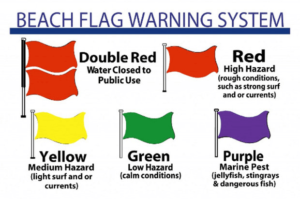
Additionally, due to a “lack of resources,” the only available lifeguards were placed on a more popular beach a few miles away.
Despite the warnings and lack of a lifeguard, Malcolm-Jamal went to the beach anyway. Around 2:00 PM, he had been playing with his 8-year-old daughter on the beach before going into the water with his friend.
In an instant, Malcolm-Jamal and another man were swept up by a strong current and drug beneath the water. Although both men were quickly pulled from the water, they had very different outcomes. The other man, a 29-year-old, was later treated at a clinic with critical injuries. He has since been discharged.
Malcolm-Jamal, however, was given CPR on the beach for about 20 minutes with no luck and was pronounced dead at the scene. He was just 54 years old.
Autopsy/Pathology:
An autopsy was done by the Judicial Investigation Agency of Costa Rica, which is responsible for criminal investigations and forensics (similar to medical examiner (ME)/coroner systems in the USA). The autopsy was completed the day after his death, and they concluded that his cause of death was asphyxia by submersion (drowning).
Although the full autopsy report has not yet been released since this post, there are still things we can learn. What does a submersion death look like?
How does a person drown?
Worldwide, drowning deaths are the 3rd most common cause of accidental death. Over 320,000 people a year worldwide drown to death.
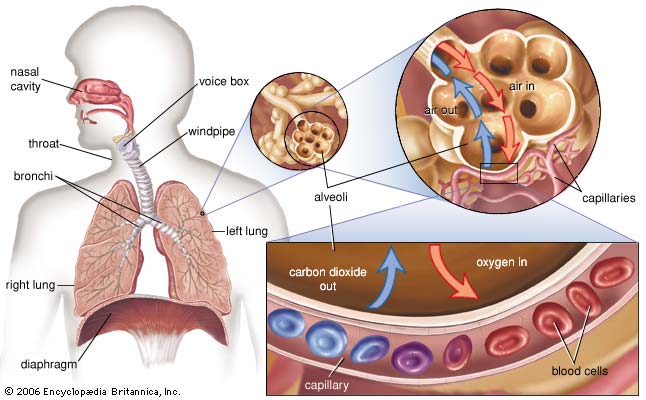
Drowning occurs when a person is submerged in water and attempts to breathe, and instead aspirates water. This leads to a decrease in oxygen in the lungs, which decreases oxygen in the blood, and ultimately leads to hypoxic (lack of oxygen) brain injury and death.
Take a look at this diagram. When we breathe, air with oxygen goes in our lungs- but it is really going to our blood! The air enters the lungs by traveling down the windpipe, into the lungs, and goes through the branches (like a tree). Once the air reaches the smallest part of the branch- the alveoli, gas exchange occurs. The small capillaries (tiny blood vessels) surrounding the alveoli give back the unneeded carbon dioxide (to exhale) and take in the needed oxygen. This oxygen is then stored in the red blood cells and taken all over the body. This is how oxygen gets to all of your organs, including your brain.
Why do people drown?
Drowning is the final pathway that causes a person to die in the water, but the question that needs to be asked is-why were they incapacitated? Why couldn’t they keep their head out of the water?
The most obvious answer is that a person drowns if they do not know how to swim. Other factors include trauma, seizures, heart disease, exhaustion, drug/alcohol use, and hypothermia, or, in the case of Malcolm-Jamal, a hazardous condition like getting caught in a strong rip current. This is why an autopsy is important!
What is a rip current?
A rip current is a strong, fast-moving current that flows away from the shoreline. They usually extend from the shoreline past the line of breaking waves, and they can happen at any beach with waves.
Here is a great photo showing what a rip current looks like. Unfortunately, the area that looks a little more approachable to enter the ocean is actually the most dangerous spot to enter.
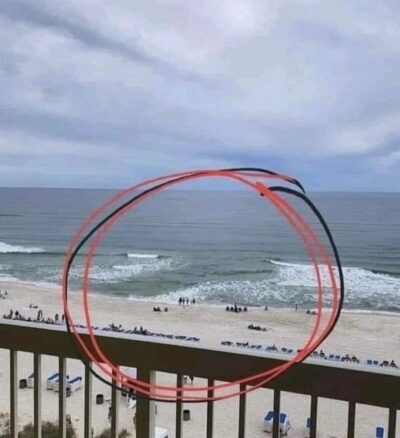
Rip currents move perpendicular to the shore and can pull you out to sea; sometimes, even experienced swimmers are not able to escape them. The best advice is to stay calm and not try to swim out of it. You should try to reserve as much energy as possible by floating. Try to go along with the current until it weakens, then swim either left or right, parallel to the beach.
What are the signs of drowning seen at autopsy?
In order for the ME to determine the cause of death was drowning, they needed to see changes consistent with drowning and also rule out other causes of death (either trauma or natural disease). Since that was ruled out in this case, we will look at the most common findings seen in drowning deaths.
Lungs
Sometimes, there can be foam protruding from the nose and mouth. This is a mixture of protein liquid from the lungs and air whipped up by terminal respiratory movement. It can also be seen in the trachea and cut surface of the lungs.


Trachea

Lung
The lungs can also look hyperinflated. This is what the lungs look like in a normal chest.

Here is an example of hyperinflated lungs from an autopsy of a drowning victim. Notice the lungs completely cover the sac surrounding the heart and meet in the midline.

Other organs
Here is a picture of the stomach opened on a drowning victim (notice the water in the stomach). This is consistent with the patient swallowing water as they are gasping for air.

Funeral
As of this post, funeral arrangements have not been publicly disclosed.
Discussion:
In this case, Malcolm-Jamal Warner likely became exhausted after attempting to swim or fight against a strong current, leading to fatigue and ultimately drowning. Despite being healthy and a capable swimmer, he overlooked two critical safety warnings: swimming at a beach with current danger flags posted and doing so without the presence of a lifeguard. It’s a tragic and preventable loss and one that highlights how even experienced swimmers are vulnerable when safety measures are ignored. Cases like this are particularly difficult to cover in The Gross Room, but they serve as important reminders for all of us!


The most tragic part is that his daughter was present.
the ice hockey world also lost another player tragically last week – an 18 year old scottish player fell off of a balcony while on holiday. been a bs week
I couldn’t even bring myself to read this post until today. I loved him as an actor and as an 80s kid was completely obsessed with The Cosby Show. I hope his family is able to find some peace in the midst of this tragedy. 💔